Stacking The Deck
“The will to achieve is not sufficient; there are certain things which should not be achieved.” Nikolai Rimsky-Korsakov, Russian Composer (1844-1908)
The summer after I turned five years old, my mom was pregnant with my little sister and, due to pregnancy complications, had to have an extended stay in the hospital. With school off for the summer, Mom out of commission, and Dad working full time in addition to hospital visits, where was I to go and who was to watch me? Well, my wonderful Gramma - Mom’s mom - who, at the time, lived four-and-a-half hours away, came to stay with us for about a month.
My hope is that you have or had wonderful grandparents or, at the very least, someone who was able to fill that role for you. Now, imagine being five years old, no siblings, it’s summer vacation, and you get your grandparent (or whoever fills that role in your life) all to yourself for about a month. Bliss, right?
While Gramma stayed with us (me), she and I played many many (many) games, especially card games, from what I remember. One sunny afternoon, she was folding laundry in the other room while I was getting the next card game set up and I distinctly remember, with no eyes watching me, realizing how to “stack the deck” by not shuffling the cards and instead placing them in a favorable-to-me order. Needless to say it didn’t take long for Gramma to see through my not-so-sleight of hand when I was miraculously getting all of the good cards and she all of the bad cards. (I don’t remember which game it was; my family, to this day, keeps a close eye on me when we play games.)
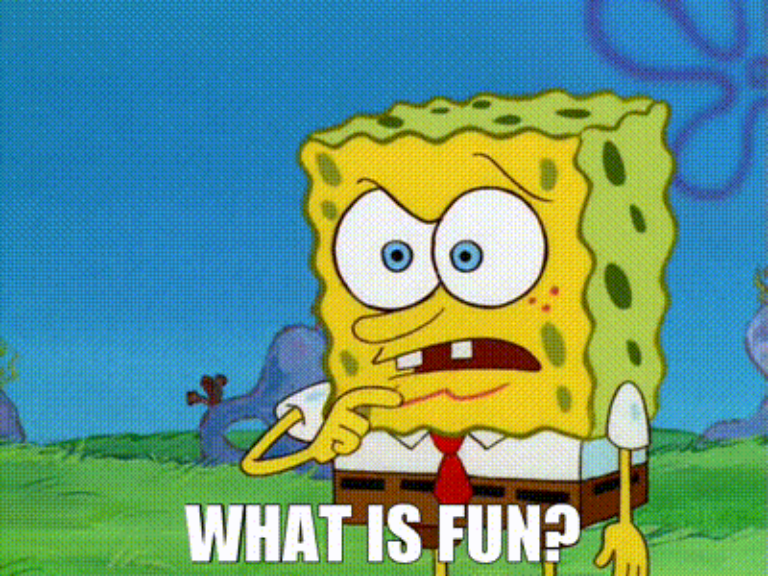
In hindsight, that moment was the germinating seed of my interest in game design, which took root in my teen years and has only strengthened in my adult life. In particular, I enjoy the question: What is fun? It’s as abstract as music - maybe more abstract. And, like music, fun is entirely subjective. Fun means different things to different people. Some find reading a good book in a cozy corner to be fun; others find a wild night in a loud bar fun. In the case of little five-year-old me and my Gramma, getting all of the good cards was fun for me but probably not so much for her.
But that question - What is fun? - has been on my mind lately. More than usual. More intentionally than usual.
It’s a quandary.
And then, while reading Nikolai Rimsky-Korsakov’s Principles of Orchestration, I came across the quote at the head of this entry: “The will to achieve is not sufficient; there are certain things which should not be achieved.”
The wonderful thing about leading a creative life is there is never a deficit of ideas. Even if one gets a creative block, the ideas are still there. We might hit a snag in executing the idea, but with dedicated work we push past the hiccup and continue on, wandering towards the result of the idea.
The bad thing about leading a creative life is there is never a deficit of ideas. To discover a new idea is almost as easy as breathing or pumping blood through your heart. I say discover a new idea because, in my experience, I don’t think of an idea; I happen upon them, like finding a mossed-over path while walking through a damp forest. But, unlike the forest which has a limited number of these discoverable paths, the mind has a nearly limitless ability to create. Therein lies the problem.
It’s a blessing. It’s a curse. If one is not careful - and by that I mean judicious - with their discoveries of ideas, one will quickly become overwhelmed by the notes and scribbles and digital documents and sketches and so on and so forth. I call this “idea bloat” or “creative bloat.” Not every idea (happened-upon or otherwise) is good, and it’s important to be judicious when looking at which ideas to keep and which to toss to the cognitive burn pile.
I’m not judicious enough. My stacks of papers and my digital folders support that claim. I have the will to achieve each discovered idea, but the will alone is not sufficient. If there aren’t certain things that should not be achieved, then there will certainly be many things which won’t be achieved. Thankfully, Mr. Rimsky-Korsakov clued me in to this nugget of wisdom.
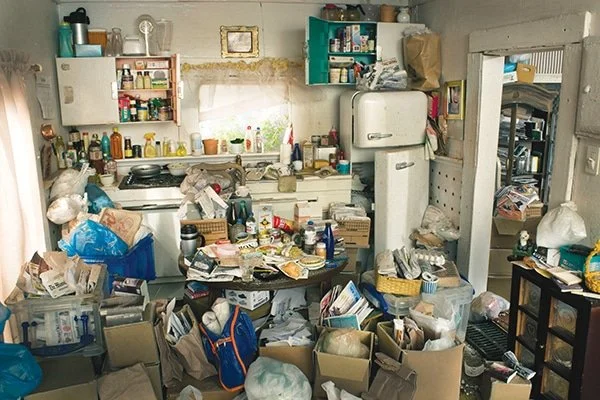
My mind feels like a hoarder house when I don’t write down my ideas, but then my workspace starts to look like a hoarder house after doing so. It’s a conundrum.
Parallel to little five-year-old me, I now find myself stacking the deck but in a much different way than back then. It’s no longer summer vacation. It’s not necessarily a warm, sunny afternoon. I don’t have the benefit of the blissful ignorance of youth under the loving guardianship of my family. And the “cards” I’m now stacking are far more important than what’s found in the standard deck.
It’s not fun to be weighed down by the bloat of creativity. In this season, as I work meticulously and judiciously to release the bloat as ballast, I find myself rising above the noise, above the fog of my own making, able to see a clear way forward with only the best of the best ideas as my companions.