A Masterclass In Artistry
In adulthood, I’ve come to love the Olympics. In particular, I love the Winter Olympics. The events of the Winter Olympics are, in my opinion, overall more unique and more thrilling to watch compared to the events of the Summer Olympics. Yes, even curling.
I’m probably romanticizing it too much, but there is a beautiful element to people from around the globe, from all walks of life, coming together to participate in shared events and, hopefully, conducting themselves respectfully towards one another despite linguistic, cultural, religious, or political barriers. Maybe even a few friendships are formed.
At the risk of being another voice on the already-mountainous bandwagon, we can’t talk about the 2026 Winter Olympics without mentioning - you guessed it - Alysa Liu.
I have to preface: I’m not and have never been interested in figure skating. I respect the athletes, they are great at what they do, I could never do what they do because I would get dizzy, fall, and cut myself eight ways to Sunday. Figure skating has just never been able to grab my attention.
It’s also important to mention that my goal from here on out is not to contribute to the rampant (at the time of this writing) parasocial obsession the internet has with Alysa Liu. It’s unhealthy behavior and it devalues our own unique existence. The entirety of this writing stems from a place of objectivity, so please keep that in mind going forward.
On the day of the free skating results, I saw a lot of buzz and headlines online about Alysa Liu. Not following the skating events, I was curious what all the talk was about. After work, I went home and watched the recording of Liu’s free skate performance (if you have not seen it yet, please watch it so we’re on the same page).
By about 30 seconds into her performance, the difference between her routine and other skaters’ routines was obvious. Liu skated with a light freedom and with joy; something other Olympic-level skaters often fail to achieve, which I didn’t realize before seeing Liu’s performance. And as her routine goes on, it’s as though watching a flower bloom. Her excitement and her energy grows. Every move appears organic and improvised, which is difficult to achieve in any vocation.
Liu’s choreography is even in time and on-beat with the music - something I don’t often see in figure skating. Usually it looks like the athlete skates and there just happens to be music playing. The routine and the music are rarely married.
For what it’s worth, towards the end of Liu’s performance, I was reminded of Michael Jackson’s performance of Billie Jean from 1983. Both have a high level of mastery. I’ve seen Michael Jackson described as being able to “move in cursive,” and I see Liu as being able to “skate in cursive,” if that makes sense.
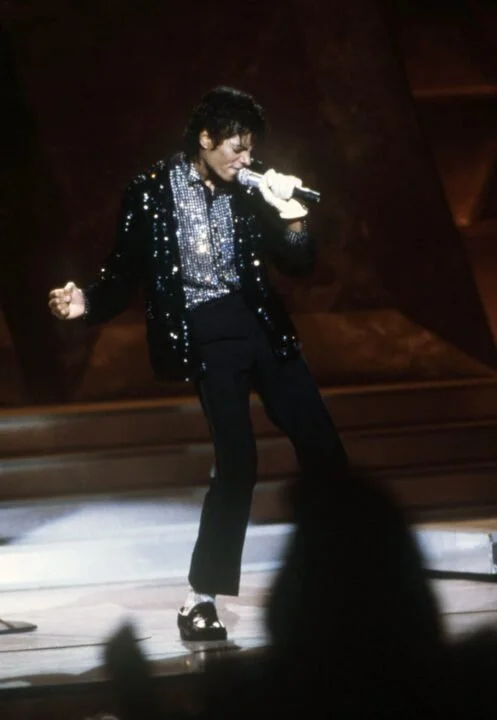
Hee! Hoo! Moonwalks
But HOW does she achieve such a carefree (and flawless) execution? Thankfully for the rest of us, Liu is not shy about giving up her secrets. According to her, she skates for the love of doing so. She wants to perform, put on a good show, and have fun in the process. She cares little about the medals and the awards and the accolades of the performance - only about the experience of the performance itself. This attitude, as I understand it, is a direct antithesis to her past training and to many other athletes’ training. Keep in mind, Liu is only 20 years old.
Even better is that she lives those standards, as made apparent in how she conducted herself post-routine. Liu expressed genuine gratitude towards those around her: coaches, teammates, family, friends - even other athletes and their respective coaches. She set aside her own ego to console and congratulate other athletes in their own moments.
But what does Liu’s personal accomplishments have to do with the rest of us?
Philosopher Friedrich Nietzsche explored a type of resentment called “ressentiment.” Simply (as I understand it), resentment is what we experience when we feel we are wronged by another, while ressentiment is blaming others for (and neglecting to admit) our own inferiority. The idea is that, by living in ressentiment - our own inferiority - we neglect our potential power and thus live a less-fulfilling life. But, if we choose to acknowledge our inferiority, then and only then can we begin to step towards our potential and, ultimately, a happier life.
Alysa Liu competed in the 2022 Winter Olympics in Beijing at age 16. Afterwards, she retired from skating due to the training being too rigid and confining, to the point of no longer having much ownership over her own passion. So she walked away from the sport.
Unfortunately, this happens far too often. Not just in skating. Not just in sports. But in dance, in theater, in music, in visual arts, in writing. I’m sure it happens across the board, among far more vocations than what I listed (or could list) here. Whether it’s due to others, or tradition, or even our own internal hindrances, it’s far too easy for the flame of our passions to be doused. Too many of us walk away from that which we enjoy, instead choosing to live in our own inferiority and, as a result, accepting a life beneath our potential.
Liu recognized, at age 16 no less, the inferiority: her expectations and the then-reality of training to skate did not match. She was allowing herself to exist in an environment that was working beneath her standards, and so she existed in her own inferiority - ressentiment.
When she returned to skating two years later, at age 18, she understood that the problem was in her settling for training practices which were beneath her needs; the problem was not in the skating itself.
Once the training regimen was corrected to fit her self-standards, and with the support of her willing coaches (bless them), Liu worked to hone her craft and was able to fully step into her potential power. What she presented, what we saw during the 2026 Winter Olympics was the result of Liu injecting herself and her humanity into the sport she loves. It was not a routine of technical ability. It was a performance of artistry.
As a bonus, she even got a gold medal out of it.
More importantly, she was able to both enjoy the moment and celebrate those around her.
I think many of us - myself certainly included - would do well to take a page out of Alysa Liu’s book: to not compromise on our standards, to enjoy the process, to untether ourselves from the material results, to be gracious and grateful participants, to be supportive and celebratory of those around us, and… to do it all in style.